
I mean, we all have our dark days. Very dark days, sometimes. When our demons come out to play. No one lives entirely in the light, right?
Mona Awad, Rouge
A human being rarely feels more threatened than when the firm fabric of his existence begins to unravel – when all order collapses and he finds himself utterly exposed to the unexpected and unpredictable. Even relatively harmless signs of such impending dissolution fill us with dread.
Jürgen Kriz, Self-Actualisation
The personality formed in the environment of coercive control is not well adapted to adult life.
Judith Lewis Herman
The arrival of children in our lives has momentous consequences. Ideally, it is experienced as miraculous, a source of joy and wonder. Yet some new parents are overwhelmed by the weight of responsibility, perhaps even experiencing dread or resentment.
For me, it was transformative, an experience I wouldn’t miss for the world. Looking back, I wish I had been more present in the early everyday routines of my young children, rather than working so hard to provide for our material security.
The arrival of a newborn also beckons us to commence – or resume – the inner work of identifying and healing our own residual childhood wounds. We may be too preoccupied with parenthood to accept this invitation, however, a common reaction which often plays out beyond conscious choice.
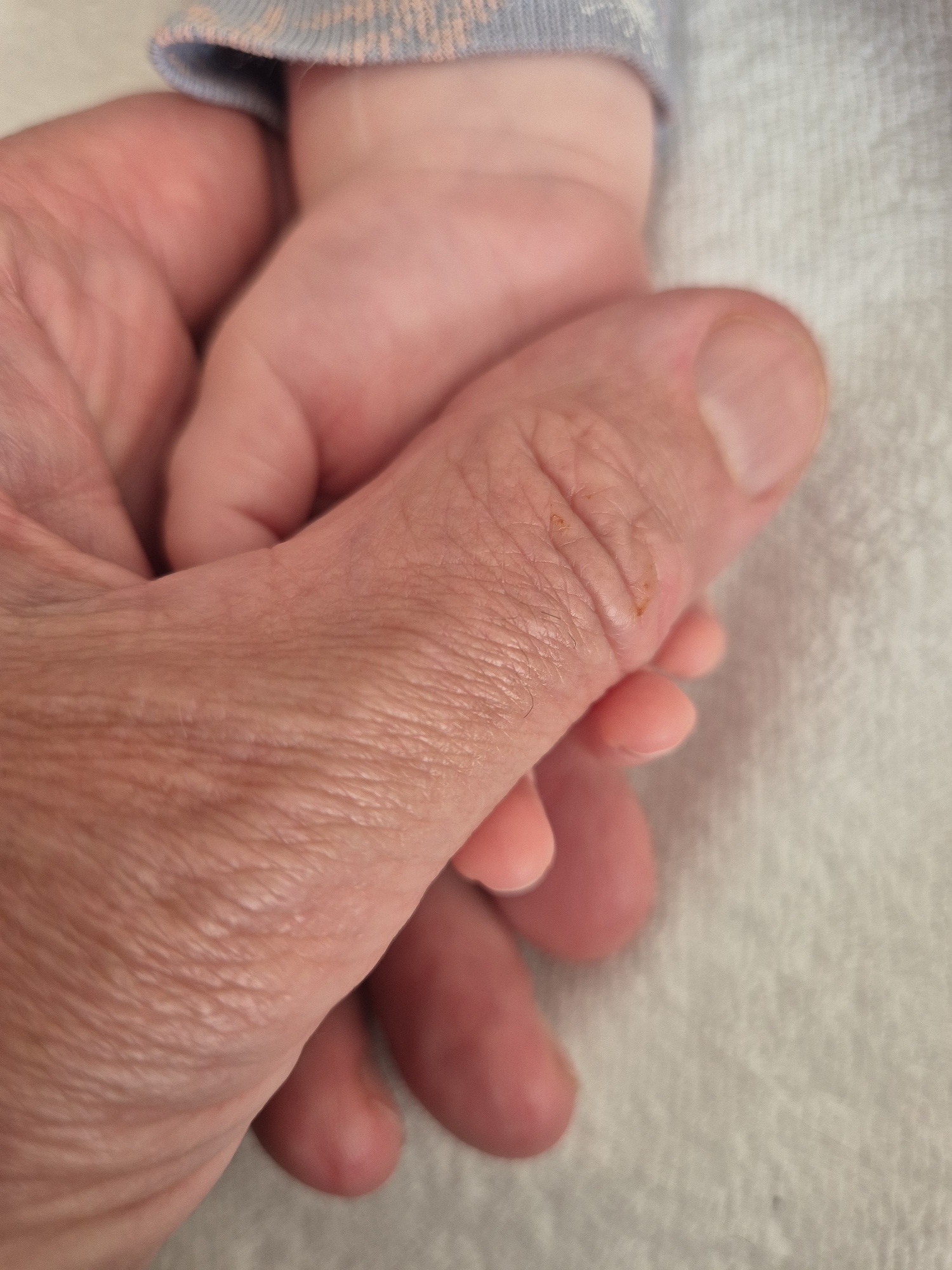
The birth of grandchildren can present that invitation anew. With decades more life experience, we may be better equipped to respond. This can lead us to processing, transforming, and transcending whatever unfinished business remains from our own childhood.
My work with the inner child, ongoing since my mid-twenties and intensified over the past two decades, has been re-energised by the arrival of two beautiful grandchildren.
Among the feelings that have recently resurfaced from my earliest days is an old, familiar sense of dread, almost forgotten. It is a powerful somatic sensation, like an aircraft at cruise altitude suddenly dropping fifty metres in turbulence.
A real thud goes through my body. Perhaps no one was there to cushion that original blow or provide the warmth and comfort that would have regulated my nervous system.
This is now my task, which I gladly undertake whenever called upon.
There is an apparent contradiction here: as a „felt sense“, my body carries an experience of existential threat, while the objective reality, here and now, is that I am safe, loved, and protected. The threat overrides objective reality whenever the trauma is reactivated.
Raising awareness of the „here and now reality“ disempowers the old illusion. Its cultivation is achieved by regular practice while honouring the original childhood experience and extending compassion to myself, the others involved, and the circumstances in which we journeyed.
Inner Child work comprises interaction between the adult me and the child within who is still suffering from wounds which were incurred long ago. It has taught me some important lessons.
As it happens, these lessons have all shaped the design of the Positive Intelligence (PQ) Mental Fitness Programme, which I have been practicing daily for the past five years and from which an increasing number of my coaching clients are benefitting, in their pursuit of Emotional Sobriety and generally improved well-being.
1) The thoughts we think and every word we speak – even in our inner dialogue – create a blueprint that the mind and body work to make real.
Telling myself „The attachment is ruptured“ or „I am now disconnected, totally alienated“ reinforces that reality. By consciously creating better blueprints, we can begin to change our experience.
2) Imagination is more powerful than knowledge.
My deeply embedded fear of obliteration can feel more convincing than knowing I am safe. Logic alone cannot override the felt sense, but a new felt sense can gradually supersede the old one through repeated re-parenting („repair“enting) of the Inner Child. The adult me now provides the reassurance and safety that were missing back then.
3) Practice makes progress.
We weren’t born believing that life is dangerous or that we will be abandoned. Such beliefs were formed through repetitive experiences and can be replaced in the same way. Body regulation, followed by new mental, emotional, and behavioural patterns, rewire our neural networks.
4) The greater the conscious effort, the weaker the subconscious response.
Sometimes, the answer emerges when we stop trying so hard. This „effortless effort“ allows the nervous system to relax and the subconscious to step back. We can now continue to learn self-regulation and co-regulation, even if these were absent in childhood.
5) Our mind takes our self-talk statements at face value.
It accepts „I’m not good enough“ as readily as „I am the nurtured child of the Great Mother.“ Ad proceeds accordingly. Here, we witness the power of reframing.
With the practices of body-awareness, regulation, and self-care augmented with the practical application of new habits, change begins to manifest. The wounds of childhood are transformed into rich gifts of adulthood.
As Bill Wilson once pointed out: „We can’t think our way into a new way of acting; we can only act our way into a new way of thinking.“