
Awe

Because many of us rarely experience awe or do so only sporadically, we remain unaware of its beneficial effects on our state of heart and mind. When most of us have the experience of feeling down, for example, we usually look for distraction through busyness or light relief through comedy or entertainment. These are not only less effective than awe; they may, in fact, be counterproductive in that our stress levels are ultimately increased by the end of the day. Cultivating awe, on the other hand, can still the mind and trigger a great mental shift, propelling our neural activity beyond what had become its predictable comfort zone…
Summer Solstice

We arrived on the first day of the retreat in awe of the wild, beautiful natural surroundings of Ballycroy, Co. Mayo in the stunning, pristine, natural landscape of the Erris Blanket Bog. Here in the wild West of Ireland, it would be no surprise to encounter selkies at dusk where the sand dunes meet the ocean on the further shore of the estuary, the confluence of the two black-brown rivers as they dissolve into the broad, salty ocean. This encounter with the „wildness without“ is conducive to our opening up to the „wildness within“, a wildness that often gets buried beneath layers of societal expectations, childhood coping strategies, urban living, busy schedules, family obligations, and the superficialities of life in our driven consumer society…
Indivisible Reality

When we say a person has her feet on the ground, we mean rooted in reality, perception unclouded by denial, delusion, illusion, grandiosity, or anxiety, all states that skew our sense of reality. If we can’t even recognise where we are, we will have enormous difficulty in getting where we want to go. It’s a bit like asking Google Maps to take me to „Cologne Cathedral“ and when the prompt comes to submit my current location, I enter „unknown“. Even Artificial Intelligence algorithms are going to have great difficulty in providing accurate directions under such circumstances…
Source
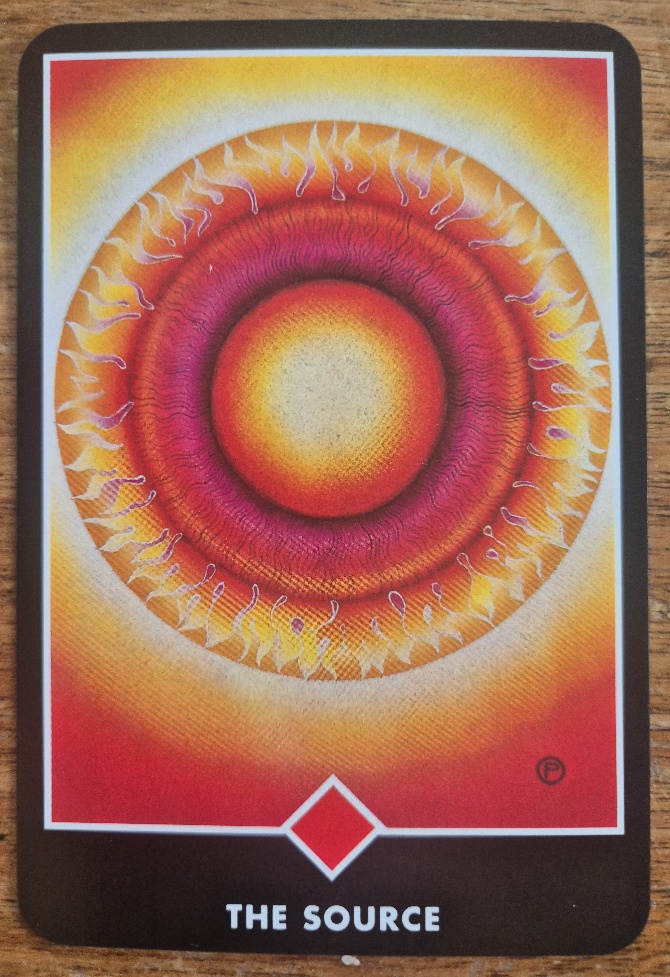
When we operate in hyper-rational mode, those with whom we interact tend to become intimidated, especially if the are less analytically inclined. We appear to them as emotionally cold, even harsh. In doing so, we proliferate a pattern we experienced as children, whereby our feelings and perceptions are discounted and belittled. The tragedy in adult life is that we are now doing this to ourselves, in our own inner dialogue, as well as to others. In the work of our circles, we men begin to transcend this old, ingrained pattern, get in touch with our feelings and – further underneath – our intuition…
Boundaries

It is incredulous that we survived such experiences as children. The abuse was bad enough, but the icing on the cake was the fact that no one was there to turn to for solace, for protection, for understanding, for solidarity, for a comforting hug. I dared not bring it up with my parents for fear that a second round of punishment would ensue. This stance emanated from my observation of how my parents treated older siblings in similar circumstances. I was smarter than that, I surmised. Into that trap I would not fall. It is this „no one being there for us in our time of need“ which is described by Gabor Maté as the „über wound“…