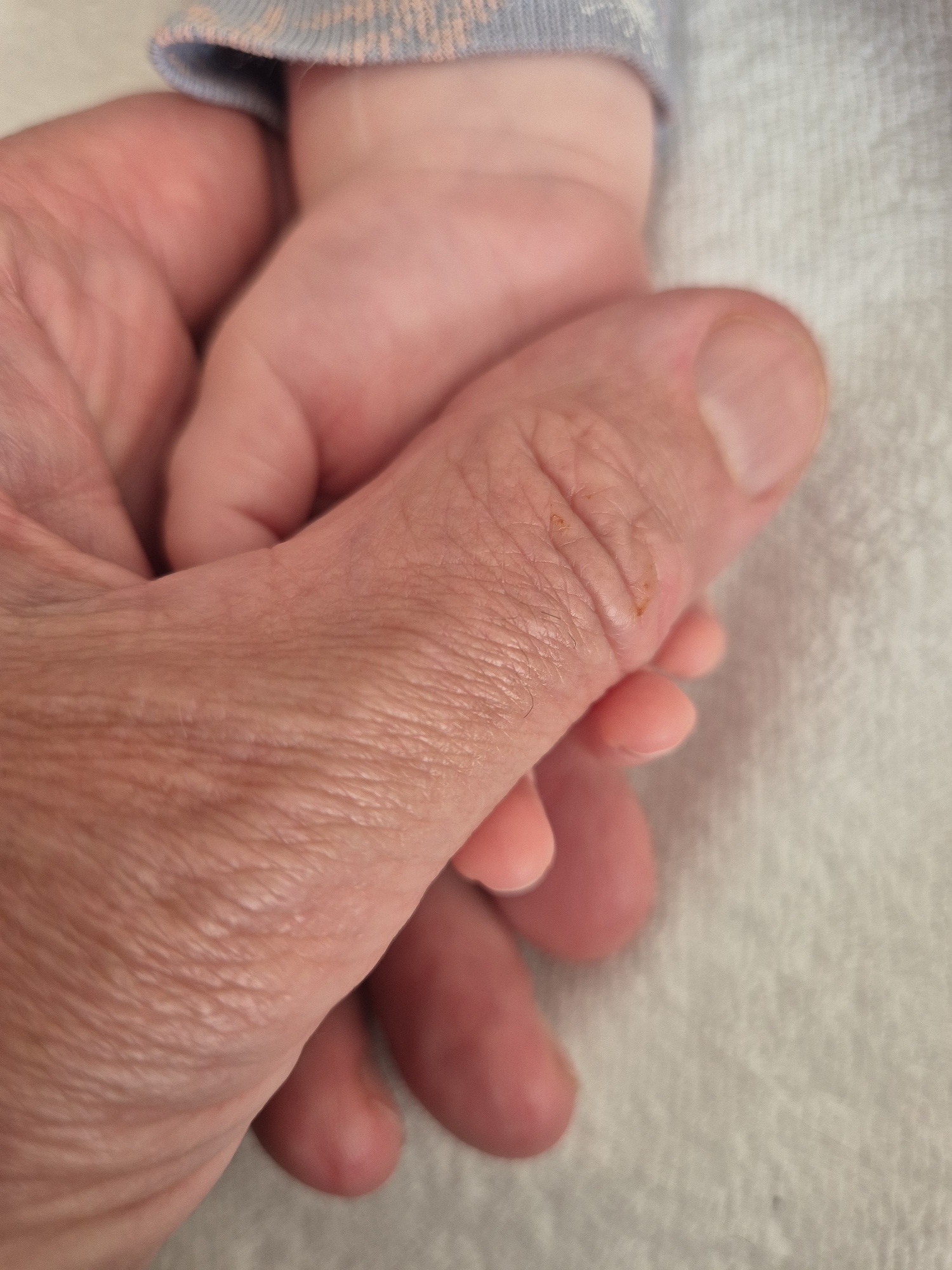

There is more wisdom in your body than in your deepest philosophy.
Friedrich Nietzsche
Your body always speaks — not in words, but in signals. Tiredness, cravings, tension — it’s not weakness. It’s wisdom. Listen before it starts to scream.
Barbara O’Neill
The body keeps the score.
Bessel van der Kolk
The prevailing winds of our culture exhort us to „fix“ ourselves and to „battle“ our limiting beliefs. Instead of taking this confrontational stance, I believe we are better off learning to understand the patterns by which the mind and body operate. We can then work consciously with what we find.
In many modalities associated with Traditional Chinese Medicine (TCM), the general principle is that the body is our greatest ally in terms of diagnosis, treatment, and healing.
In kinesiology, for example — known to many for its muscle test applications — the prevailing principle is that the body knows all the pertinent answers. The challenge is to identify and pose the relevant questions.
In the process, we create new mental blueprints, use imagination to rehearse more wholesome possibilities, and employ repetition to anchor new beliefs and behaviours which feel increasingly wholesome and natural. I was lucky to have gifted teachers while learning this modality many years ago.
No force. No willpower battles. Rather, simply learning to observe and work with how the mind and body naturally operate, and co-operate.
Recently, I have been waking up lying on my belly, with my feet crossed diagonally, the right over the left. It is a posture I began to observe with curiosity, particularly in the context of my ongoing Inner Child work.
When deep emotional memories or early developmental experiences surface through therapy or personal reflection, the body can sometimes express what the conscious mind has yet to fully grasp. Sleep, when our usual conscious defences are relaxed, provides a further opportunity for these experiences to find expression.
What might this remarkable posture be telling me? Several interpretations have emerged, guided more by my intuition than by scientific proof.
Lying face-down creates a sense of containment, shielding the more vulnerable front of the body. Pressing one foot over the other provides additional physical contact and sensory feedback, perhaps offering me a subconscious means of holding, anchoring, or comforting myself.
The crossed feet also provide a sense of self-containment. This could be a return to an earlier, more instinctive way of seeking safety, perhaps even as far back as the foetal dawning of development.
Inner Child work can bring us into contact with experiences that predate language and conscious memory. Perhaps the body remembers ways of finding comfort and security that the adult mind has long forgotten.
There may also be an element of grounding. Emotional excavation can sometimes leave me feeling exposed, unmoored, or overwhelmed. Physical contact and pressure can provide a reassuring sense of boundary and stability.
Perhaps, too, this is simply the body finding its own way of integrating the emotional work taking place during my waking hours.
Whatever the explanation, I am inclined to approach this with curiosity rather than judgement.
As there is no discomfort involved, there is no reason to force a change. Instead, I can listen to what my body might be communicating.
A few gentle practices are proving very beneficial.
Notice without judgement. Rather than interpreting the posture as something that needs correcting, I can acknowledge that some part of me may be seeking additional safety, comfort, or grounding. There is no danger of getting too much of that.
Creating conscious comfort. Before sleep, I sometimes put on a warm pair of socks, cuddle under a heavy blanket, or simply place a hand over my heart or stomach to provide some of the reassurance and containment that my body appears to be seeking.
Morning check. How does the posture feel? Cosy and reassuring, or does it suggest tension and bracing? The emotional tone accompanying it may be more revealing than the posture itself.
Ultimately, this is another invitation to befriend rather than confront myself. The adult me can offer the warmth, reassurance, and protection that the younger me once needed and did not receive.
Perhaps the most important lesson of Inner Child work is that healing does not always require us to understand everything. Nor do we need to consciously direct every step. Sometimes it is enough to create the conditions in which the body can feel safe, the nervous system can settle, and some tension, long held, can finally begin to soften.
We need not force the process. We can learn to trust it. I decide anew — each morning — to trust the unfolding process.