The ancient Irish had a saying: ‚You don’t give a man a weapon until you’ve taught him how to dance.‘ In other words, a different kind of learning is required before someone can be truly trusted with social power and potent things like weapons. If a man does not know the wounds of his own soul, he can deny not just his own pain, but also be unmoved by the suffering of other people. More than that, he will tend to put his wound onto others. He may only be able to see the wound that secretly troubles him when he forcefully projects it into someone else, in forms of abuse or violence.
Michael Meade
God is a DJ, life is a dancefloor, love is the rhythm, you are the music.
Anonymous
The dance is a poem in which each movement is a word.
Mata Hari
The atmosphere of those teenage Sunday afternoon discos in dilapidated parish halls and glamourous hotel ballrooms is still palpable; that mix of sensuous intoxication from the loud, rich sweeping disco melodies and the dread of having to ask a girl to dance, with the inherent risks of rejection or, perhaps worse, acceptance; the choreographic incompetence that derives from a sixteen year old’s self consciousness matched only by the social incompetence of how to engage with the opposite sex.
I had role models for neither. The human body, in the Catholic culture of Ireland’s sixties and seventies didn’t get much positive encouragement. It was `the flesh´ that was weak, a necessary evil inherited by each of us in a package marked `original sin´. It was to be kept clean and chaste, and submitted to regular exercises in self control, less it led to vanity or worse.
The sporting activities offered me (rugby, soccer) I declined out of a deep-seated fear of physical violence, and, in the face of rejection and ridicule from my peers, my intellectual faculties quickly hijacked any inclination to engage in sport.
The topic of interaction with the fair sex was equally underexposed in my social training. `No sex before marriage´ was about as much as I could glean, whereby nobody had ever bothered to address either sex or marriage with me. This just meant that, while we simply followed our natural instincts, our first pleasurable experience, real or imagined, with girls of our age took place under an ever-present toxic cloud of shame and guilt.
Then drink came to the rescue, oiling the wheels of social engagement and, in my case, turning me at once into a willing participant on the dancefloor. How embarrassing now to think of the ever-widening chasm between self image and what others observed. As a binge drinker, I would often wake up in strange places not knowing what had transpired in the final hour or hours of the evening before.
The resulting slow creep of paranoia took me away from the dancefloor once again, an absence which lasted as long as my drinking continued, until my early forties. Then, by a combination of desperation and grace, I embarked on a journey of recovery which continues to this day.
Those first weeks and months of recovery were hounded by many daemons, one of which declared that `life was over; celebration was now a thing of the past´. Never mind that celebration had long since deserted me in the final decade of my drinking, these thoughts still cast a dark spell, as long as I let them. My role models in recovery taught me that the destructive thought patterns and behaviours which had characterised my life could be relinquished and replaced by life-affirming, loving ones. It was a question of taking responsibility for my life by acting my way into a new way of being rather than trying to think my way into a new way of behaving.
So, I slowly returned to dance. This time, totally sober, in the spirit of curiosity and adventure. It was one of the many body practices I embraced (Yoga, Qui Gong, Meditanzion, Five Rhythms, and more) in the intuitive knowledge that recovery was to be achieved through the body, not the mind.
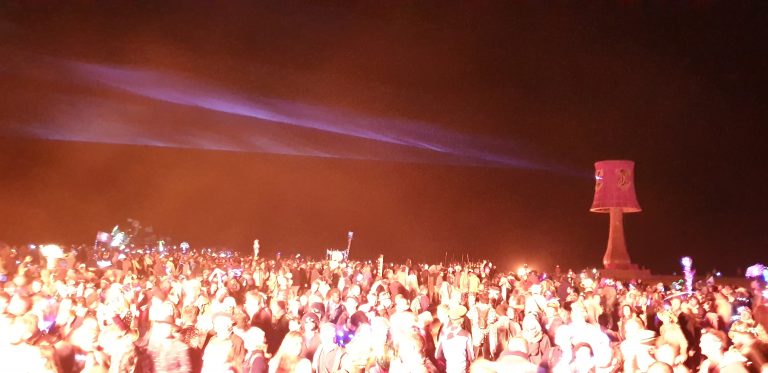
Now dance has become an integral part of my week, despite the challenges presented by over two years of lockdown. When I begin to move, my mind empties out and the rhythm of the music takes over, absorbing me into its energy field. I am not dancing, I am `being danced´ by universal energies, by the Great Spirit herself. It is a wonderful liberating feeling, of which I never tire.
My preference is to dance barefoot on natural ground below the stars, and in winter, on a polished wooden dancefloor. The opportunities had been evolving and multiplying in the years leading up to lockdown and the hope now is that the movement will continue to grow and flourish.
Referring back to the reflections of Michael Meade on culture-making; `in order to properly bear arms a person must first become disarmed, as in becoming vulnerable and connected to something meaningful and supportive of life.´
That re-connection began when addiction recovery emerged as one of only two options left. Having conducted a corrupted spiritual search in the bottom of bongs and bottles for almost thirty years, I was totally lost at sea, did not know the `who´ or the `why´ of my life, my head filled with shame, guilt, fears, anger, and resentment. Recovery, as tackled using the Twelve Steps of AA, helps us address these issues, to distinguish between the self-induced, fear-based illusions of a sick mind and the reality of a benign Universe of opportunity and abundance, fuelled by love.
In Meade´s view, `the idea of forging the temperament of young men took precedence over the idea of simply giving them weapons at a certain age. The tempering of the souls involved discovering what kind of anger each might carry and learning about the inner line where anger turned into blind rage. Becoming tempered also meant immersing in the sorrow of one’s life and thereby being in touch with the grief of the world.´ Recovery is the exact opposite of the pain-avoidance strategy of prolonged substance addiction which had become my way of life. It is a process of learning to be present. This implies a readiness to encounter, embrace, and process the pain we have experienced all along the way,
For me, dancing is a key element in this evolution. Long may it continue to be my mode of movement for the rest of my time here on the Universal Dancefloor!