Here you are! In the sacred present. I can’t heal you — or anyone — but I can celebrate your choice to dismantle the prison in your mind, brick by brick. You can’t change what happened, you can’t change what you did or what was done to you. But you can choose how you live now. My precious, you can choose to be free.
Edith Eger, The Choice
Centred in selfhood, I am assuming full moral responsibility for what I am, even for what I unconsciously am, and for what I’m up to. It’s a paradox, isn’t it? Spiritually we must get rid of the self, morally we must assume it, it being the condition and ground of moral action in the world.
John Moriarty, Anaconda Canoe
What if I should discover that the poorest of the beggars and the most impudent of offenders are all within me; and that I stand in need of the alms of my own kindness, that I, myself, am the enemy who must be loved — what then?
Carl Gustav Jung
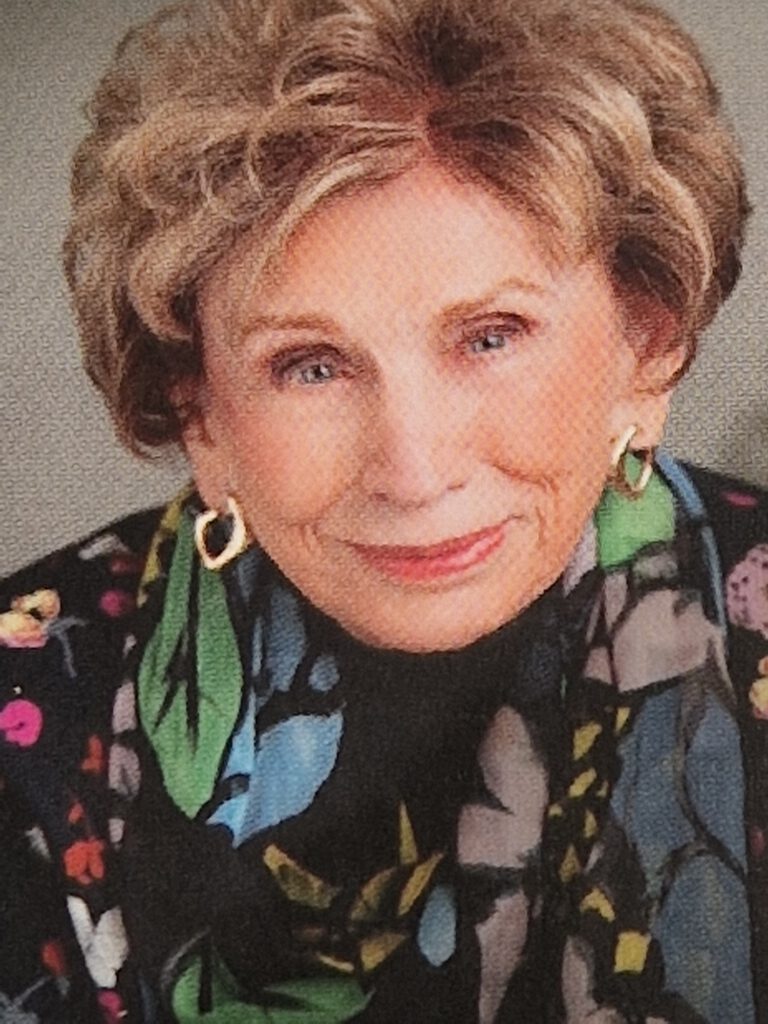
Edith Eger has been one of my most inspiring teachers over the past ten years. It was with great gratitude and some considerable sadness that I heard the news of her passing this week, at the ripe old age of 98.
Born on September 29, 1927, to Jewish parents in Košice, Czechoslovakia (now Slovakia), Eger was a gymnast and ballet dancer aspiring to representing Hungary at the 1944 Olympic Games.
These dreams, already wobbling due to the unfair racist treatment she was receiving from local sporting authorities, were dashed in 1942 when she was removed from the Hungarian Olympic gymnastics team due to the enactment of anti-Jewish laws, essentially banning her from competing because of her religion. Then, in May 1944, at age 16, she was deported to Auschwitz with her entire family. Upon arrival, her parents were sent directly to the gas chambers, never to be seen again, but Edith and her sister Magda were spared.
On her first night in Auschwitz, she was forced to dance for the infamous Nazi doctor, Josef Mengele, which she navigated by imagining she was performing in a ballet at one of Europe’s grand theatres. Mengele gave her a loaf of bread as a prize for her performance.
In her memoir she describes how, though famished, she had the presence of mind at that moment, not to immediately bite into it but, instead, to put it in the pocket of her apron, to later share it with the other girls in her barracks. She had already seen through the pattern of domination — divide and conquer — even within 24 hours of arrival at the concentration camp and the trauma of losing her parents.
Her experiences at several such camps and during the foot marches from one to the other were nothing short of harrowing, yet she managed to remain in the Sage energies propelled by love, rather than allow fear to lead her to despair, to judge, or to harbour hatred and resentments.
In May 1945, she was found by American troops in a pile of corpses at the Gunskirchen Lager, a sub-camp of the Mauthausen Concentration Camp in Austria, having collapsed due to malnutrition and severe illness.
After the war, she met her husband, Bela, in Czechoslovakia. They subsequently emigrated, under extremely difficult circumstances, to the United States in 1949. It was there that she earned a PhD in psychology from the University of Texas, El Paso, in 1969.
After a clinical internship at Fort Bliss, Texas, she went on to establish her own clinical practice in La Jolla, California, becoming a pioneering therapist who taught her clients that individuals can choose to heal and transcend the wounding of their pasts.
She specialised in treating PTSD (Post-Traumatic Stress Disorder) and helping patients through a variety of approaches to overcome their woundedness, her philosophy always focused on the „power of choice“ — that while we cannot change the past, we can choose how to live in the present and break free from victimisation.
At one point in her work, she exclaims: How dare they call it (PTSD) a „disorder“?
Her point was that trauma is a natural way of the psyche protecting us from what we cannot process at the time it occurs. Later we can learn to unwrap the gift that every experience and circumstance contains, even those which were terrifying or horrific at the time.
Her great gift to me was her guidance in exploring each gift, in the context, of course, of her own experience of not only surviving great calamity but in transforming her experience into a catalyst for healing, growth, and thriving — her own and all those she touched with her message.
My initial encounter with her work came in the form of her first book „The Choice“, her bestselling memoir detailing her experiences and her journey to healing, published in 2017.
This was followed by „The Gift: Twelve Lessons to Save Your Life“, a book about managing emotional, mental, and physical struggles.
Several things stand out for me today as I reflect on all the gifts she bestowed upon me these last few years.
The first is what she called the „three golden words“ that any therapist or coach should apply in ample quantities. These are: „Tell me more….“.
Even the most brutal, hardened client can be calmed by pure presence and true listening. It might take several iterations, but listening usually takes us to the core of any issue through the pain stored in the tissues of the body. This leads to the client softening, initially in vulnerability and grief. It is my privilege to think of Edith (or Edie, as she was called by her friends) every time I put this into practice in both my private and professional interactions.
The second resonated with me in a special way on my first reading of „The Choice“. Quoting her mother during the more carefree times before the dark clouds of fascism appeared, she relates her as saying: „When you can’t go in through a door, go in through a window“.
This advice, representing resilience and urging us, when faced with obstacles, to find alternative ways forward, to never give up on finding a solution, reminded me of my own challenges when, in 2003, I began a journey of recovery after 26 years of alcoholic drinking and addictive abuse of other drugs. I had never heard it expressed in this fashion.
It resonated with me immediately.
In the early days, I was often faced with „no way out“, in the sense of the absence of doors which could be opened. Yet, with the loving, kind assistance of others further along the path of recovery, I was able to identify windows. And when these were too high up, it was always possible to find some wooden crates or a leg up from a fellow to reach the window and climb through.
The day I discovered these passages, I embraced Edie as my soul sister.
A further inspiration came from Edie’s dedication to her calling. She never tired of spreading her message of encouragement in the spirit of service to humanity. He last Facebook post, shared a few weeks ago at Easter, was full of humour and vitality. This is how I would like to be still living in my late nineties, should that time be bestowed upon me.
Edie didn’t let fear dictate her thoughts, emotions, or actions. Not for long, at any rate. When she was first invited to speak at a post-war convention in Germany, at the Auschwitz-Birkenau concentration camp in 1990, she refused. After some conversations with Bela, however, she changed her mind with the perspicuous explanation: „If I don’t go it would mean that Hitler had won after all!“
This ability to discern what was driving her intentions, and her willingness to change course whenever she discovered that fear was lurking in the shadows pulling the strings; this awareness and vitality has always inspired me. It is something which can be cultivated on a daily basis by following the example of people like Edith Eger and Viktor Frankl, another concentration camp survivor who used his experience to encourage us to give purpose to our own lives.
This capacity to intercept our fear-driven Saboteurs, often in real time, and to make that critical shift to Sage — the Powers of Love — resides within each and every one of us.
Edith was one of a cohort of people which will soon all be figures of the past. My intention is to honour her memory as long as I live. This will be done by carrying her message to future generations for as long as I am given the health and energy to do so.
Thank you Edie!