I am creating a healthy future. Snow drifts to the ground in soft white flakes, changing the shape and the look of the land. When the snow is thick and deep, it hides everything, both beautiful and ugly. Abandoned cars, garbage, flowers, and gardens become vague shapes in the fields of endless white. It is not until spring we really know what lies beneath the snow. I have buried my past underneath many feet of snow. This beautiful cover hides the good and the bad alike. New growth and new healing cannot take place until spring comes.
Today I will no longer be afraid of spring. I will welcome it. When my past is revealed, I will remove the old debris and reflect on the good memories there. Then, like a loving gardener, I will plant seeds, encouraging new growth. In this season of rebirth, I am creating a healthy future by tending to my recovery.
Rokelle Lerner, Affirmations for the Inner Child, March 30 „Spring„
You miss the world
The one you knew
The one where everything made sense because you
didn’t know the truth
That’s how it works
Till the bottom drops out
And you learn we’re all just hunters seeking solid ground…
Sara Barreilles, „Orpheus„
The following conversation (paraphrased somewhat) between the beautiful and very successful Irish folk singer Dolores Keane and the talk show host Tommy Tiernan was re-broadcast last week on the occasion of her sudden passing. Since news of her passing emerged, the recording has been making the rounds on social media:
Tommy: Did ye have a tough upbringing?
Dolores: No!
Tommy: Who was in the house at home. Where did the idea of you being a singer come from?
Dolores: There was always music in the house. I was brought up with it. I was never taught where the buttons were or where the strings were, or anything like that. It was just a way of life, you know.
Tommy: How many of you were in the house at home?
Dolores (hesitant): Well, I was, I didn’t live with my, my parents. Uh I, I don’t know, I left there at three or four. Um, my sister died, um, from TB and then all the rest of the family had to be farmed out, you know, to the cousins and, and all that, until the house was safe for living and again, you know. But uh I mean I, I still miss it, so much, you know.
But I, I never went back, except when my Aunt Rita, — because they were the only one with the car — and she’d bring us to Salthill for a day during the summer, or we’d go visiting people maybe on the Sunday, um but other than that I didn’t have that much, that much of a rapport with the rest of my family for a long time.
Tommy: So, at four, whose house did you go to?
Dolores: To my grandparent’s house, oh yeah.
Tommy: Would ye sing me a song now?
I had to listen back because I couldn’t believe my ears the first time.
Dolores, who struggled with alcoholism later in life, answered the question about the tough upbringing with a clear „no!“. She then went on to describe how, when still a young child, her sister died (from the widespread and very infectious Tuberculosis) and the children were „farmed out“ to the cousins (she to her grandparents), after which she had very little contact with her parents again. And that plaintive statement: „But uh I mean I, I still miss it (home), so much, you know…“ kept re-playing in my head for the rest of the day. (The interview, — conducted with great grace and compassion — is available on YouTube, and worth viewing in full.)
I could see my handling of my own childhood experience reflected in this interview. Although the stark facts were clearer to me from the beginning, this was only in the cognitive realm. The emotional was kept at bay by my Hyper-rational Saboteur who would come up with statements such as: „It wasn’t that bad; others had it far worse“ or „What didn’t kill you has made you stronger.“
For many years, even decades, I shielded myself from the emotional impact of what I had experienced in the first twelve years of my life, especially the first four. This is a more common phenomenon than we would like to believe.
It is only with the melting of the snows of denial, that the truth has begun to emerge. This is not a matter of drama, or self-pity, or, indeed, blame. It is a matter of consciousness.
At a Twelve Step meeting one time, a friend provided a very simple, pragmatic, and eloquent definition of „expansion of consciousness“. He said, „we get to know ourselves better“. This has been my experience during over twenty years of recovery from alcoholism and addiction to other drugs. We cannot get to know ourselves, however, if we do not know and embrace our past.
Neuroscientists, behavioural psychologists, and psychotherapists tell us that the first four years are the most formative. The direction set on the emotional and somatic compass during this period determines the course of the rest of our lives, that is, until we consciously adjust the settings of the compass.
Imagine turning on Google Maps and asking for the directions to Cologne Cathedral. The app asks us to provide our current location. I respond that I don’t know my current location but ask for a route suggestion anyway. That is not going to work out very well.
Yet countless people find themselves in this very situation. Like Rokelle Lerner, „we have buried our past beneath several feet of snow.“ We cannot heal what we cannot feel. „New growth and new healing cannot take place until spring comes.“
The spring does come for many of us. Usually not in any easy way, but as the product of our desperation when, as Sarah Bareilles sings, „the bottom drops out“ and our house of cards comes crashing down. For me, it was a terrible experience in that summer of 2003 and yet I now consider it the most precious of gifts.
I wouldn’t want to change what transpired. What I would do differently today is to communicate in a more responsible manner to those most effected; my children, their mother, and my siblings.
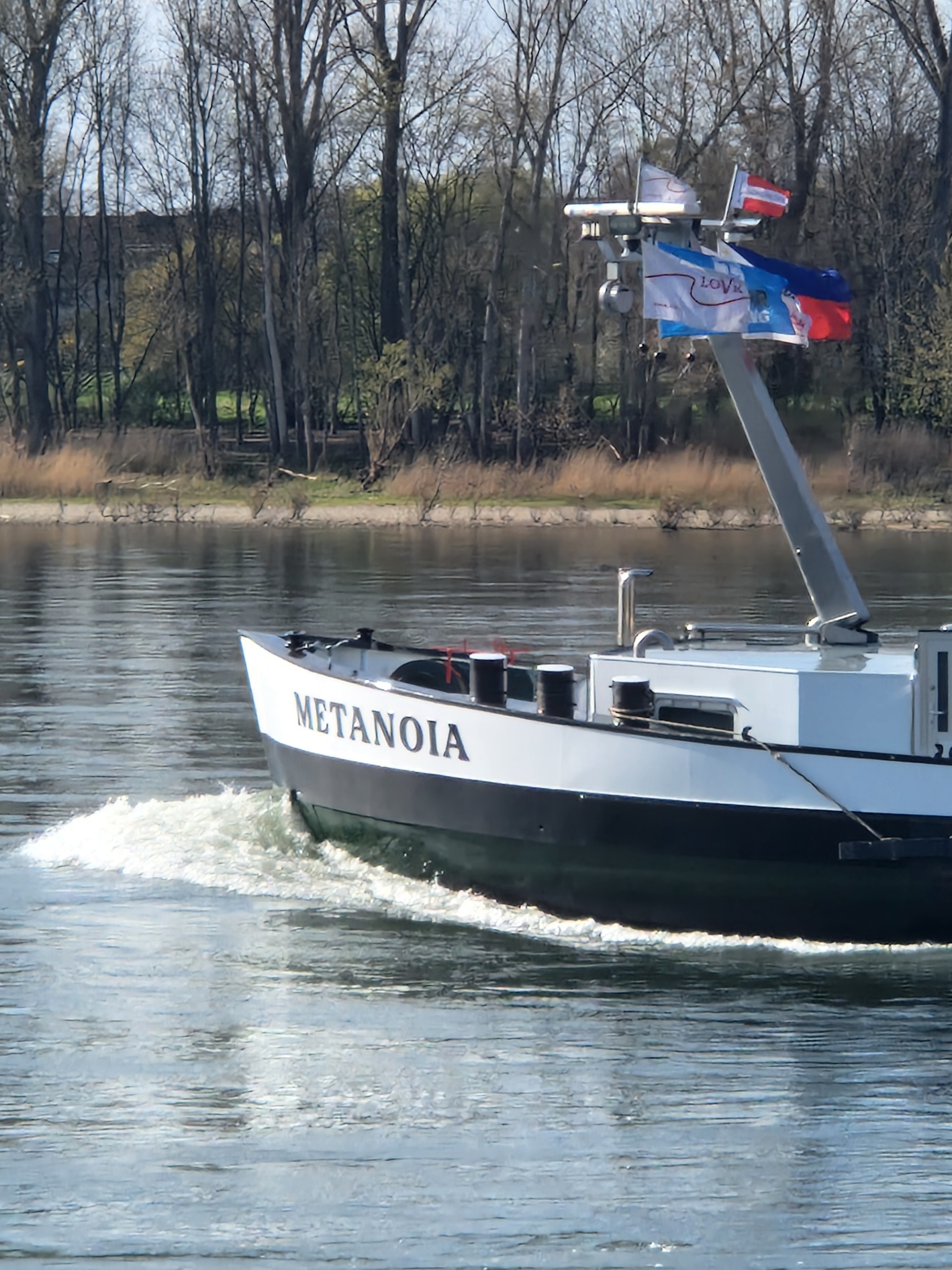
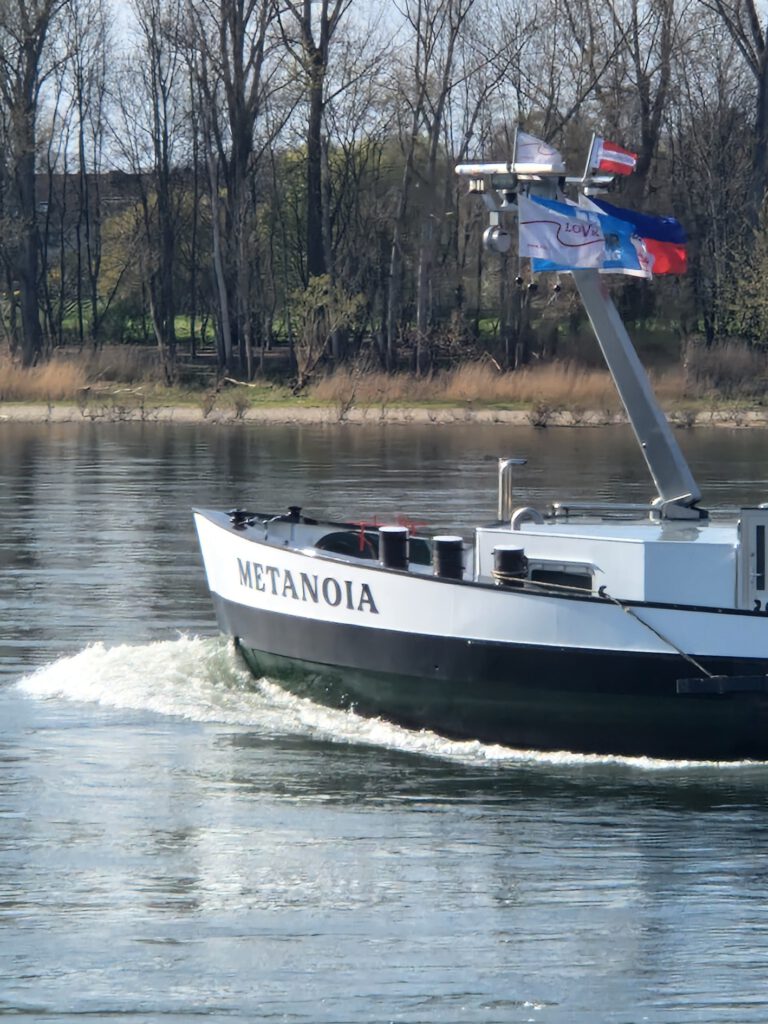
Cassady Rosenblum, Rolling Stone, 28 June 2022 is quoted on the Merriam Webster online dictionary, as follows: „According the Greek Orthodox Church, metanoia means to change one’s mind; to expand it in such a way as to have a new perspective on the world or one’s self.“
In usage for over 500 years, the word is derived from Greek, from „metanoiein to change one’s mind, repent, from meta- + noein to think, from nous mind.“
Usually used in the context of a „spiritual conversion“, I now see it — through the lens of „practical mysticism“ — as an accurate description for what happens when we open ourselves up to the truth of our experience of childhood.
In his excellent book, The Myth of Normal, Dr Gabor Maté defines „small t“ traumas not as overt, catastrophic events, but as the subtle, chronic, and often invisible absence of necessary nurturing and emotional support during childhood.
While „Big T“ trauma involves direct abuse or violence, „small t“ trauma occurs when essential emotional needs — such as being seen, acknowledged, accepted, appreciated, and loved — are not met.
It is often less about what happened and more about the things that didn’t happen and should have. It is the deprivation of necessary nurturing, love, and attention, rather than just the occurrence of harmful events.
My parents were both born in the third decade of the 20th century, each from families of eleven siblings. They met in their twenties, married and went on to bring ten children into the world. Even the most capable and dedicated parents would have difficulty providing every child with the basic physical, emotional, and spiritual attention that we all need in order to flourish.
They, themselves, were the product of families characterised by emotional austerity. They brought up their children in the new „nuclear family“ model, without the day-to-day support of the traditional extended family. By the time I was born — the fifth child — they were showing clear signs of burnout. Nicotine addicts, they both died of cancer in their early fifties, leaving a clutch of very young children behind.
This added some „Big T“ trauma to the already existing wounds, in my case. It is only now — six decades later — with the help of the Twelve Step Programme for those wishing to recover from growing up in dysfunctional families — ACA —, that the snows are melting, allowing the cultivation of Mental Fitness and vibrant Emotional Sobriety.
This metanoia, for which I am most grateful, is helping me to finally live my life to the full. It is the best way, in my view, to honour my loving parents, who burned out so early.
Richard Rohr, a leading contemporary mystic, says — when speaking about childhood trauma — that we have only two choices: „We can either transform or transmit (to the next generation)“.
I concur and am so grateful for the many modalities for transformation which have emerged in our lifetime: The ACA Programme, the Positive Intelligence (PQ) Mental Fitness Programme, Polyvagal Theory, Emotional Freedom (tapping) Technique (EFT), various forms of Somatic Trauma Therapy, and more. We truly live in a Golden Age, in terms of the resources available to us, and their ready accessibility to anyone who wishes to partake of them.
In the introduction to the so-called „Big Red Book“ of ACA we read: „Adult Children (members of ACA) are committed to halting the generational nature of family dysfunction for the greater good of the world.“
Metanoia is a key component of this process.