Weekly Reflections

Eine Oase ist ein guter Ort, um innezuhalten, sich zu sammeln, zu reflektieren und die Batterien aufzuladen. Jede Woche gibt mir reichlich Inspiration in Bezug auf Themen; mögliche Quellen sind Coaching-Sitzungen, Gespräche mit Familienmitgliedern und Freunden, meine eigene Lektüre oder einer der vielen Beiträge und Podcasts, die ich unterwegs genieße. Ein Thema wird mich Anfang der Woche ansprechen und ich habe dann große Freude an dem iterativen Prozess des Entwerfens, Überarbeitens, Polierens und Fertigstellens jedes Aufsatzes. Dann folgt die Auswahl eines passenden, meist aktuellen Fotos aus meiner Sammlung, um das aktuelle Thema visuell zu akzentuieren. Wenn Sie die Artikel in Deutsch lesen möchten, klicken Sie bitte auf den entsprechenden orangenen Button „Translate >>“.

Ich lade Sie ein, sich eine kleine Auszeit zu nehmen, Ihre eigene sechsminütige Oase zu schaffen, einen bequemen Stuhl zu finden, sich niederzulassen und zu lesen. Mögen Sie ein Gefühl der Identifikation erleben und hoffentlich etwas Inspiration in diesen wöchentlichen Reflexionen finden. Wenn so, fühlen Sie sich frei, die `Weekly Reflections´ zu abonnieren:

Sie erhalten dann jede Woche zukünftige Ausgaben direkt per E-Mail. Bitte teilen Sie den Link auch in Ihrem eigenen Freundes- und Mitarbeiterkreis.

Schließlich sind Feedback und Kommentare immer sehr willkommen. Ich wünsche viel Genuß bei der Lektüre!

Community

Loyalty

The outward focus on people, places, and things – as the presumptive wellspring of the love and sense of belonging we so strongly yearn – this erroneous attitude is a major cause of subsequent suffering in later life. The process of recovery is primarily a process of inner work on self. We do not recover to change our parents, our partners, or the world. We recover to grow in awareness. We recover to develop a new pair of glasses through which we view the world more objectively. And we recover to establish and practice new behaviours. In short, we do the work of recovery that we might be changed…

Read More »
Community

Family System

In doing this work, we cannot dodge the old wounds and thus re-feeling the original pain. That is the difficult part. In exploring my family dynamics, it is important to acknowledge the loving kindness that pervaded my family of origin, in conjunction with the systemic dysfunction described below. Many precious gifts were created and shared through this kindness. Wounds are part and parcel of the human experience. It was not for lack of kindness that wounds were inflicted. It was, rather, lack of awareness…

Read More »
Community

Cowardly Lion

When I apply this approach, it quickly becomes clear that the accusation of cowardice is false. There have been many occasions and situations in life where great courage on my part had been the essential factor in pulling through. For any teenager to accompany his terminally ill father in his final journey takes courage. Getting out of town – in my case emigrating at the age of 19 – takes courage. It takes courage to ask for help, to do the work of recovery. It takes courage to set healthy boundaries. It takes courage to follow one’s bliss. It takes courage to share such insights as those found in my writings..

Read More »
PQ Mental Fitness

Rheostat

This brings me to the rheostat. On emerging into adulthood, mine seemed to be missing. In recovery, we address such issues. Once we abstain from the cruder forms of emotional self-medication, we can begin to learn to self-regulate. My early years were undoubtedly overshadowed by what led to the panic attacks described above. Therapists have suggested it might have been a traumatic experience, physical, emotional, or spiritual, in my early years. The honest answer is that there is still no clear answer…

Read More »
Community

Gifted Child

Recent discoveries in neuroscience, especially regarding the plasticity of the brain, have provided the welcome reassurance that these default scripts can be modified and even overwritten, right though to old age, correcting the earlier erroneous assumptions that we were forever stuck with what formed in the first seven years…

Read More »
Community

Abundance

It is no wonder, then, that contrary to the initial intention, those of us affected become less and less vibrant over time, as if the life were being sucked out of us. Obsession supplants imagination, compulsion replaces creativity, fear displaces joy, connection makes way to alienation, and the `being´ in `human being´ begins to wither on the vine. Recovery becomes possible when we hit bottom, when we become so sick and tired of being sick and tired…

Read More »
Community

Inviolability

Many of us carry a bag of different lies around with us until we begin to take stock of our lives. We may, therefore, have two or three main Saboteurs which are the cause of most our problems. We each have a unique Saboteur profile. Just as it is necessary and beneficial to handle more overt losses by grieving in a healthy manner, – rather than avoiding, numbing, and dissociating – we learn in recovery to practice loving ways to grieve our childhood losses and the alienation of Self…

Read More »
Community

Fellowship

For me, the key question is what impact these achievements have had on our happiness. Are we as happy or even more happy than our predecessors? I have my doubts. Rather than get into a competitive debate about today and the `good old days´, my interest revolves around one important question: In a world which values freedom above all other human characteristics, are we really free?

Read More »
PQ Mental Fitness

Refraining

Deeper layers of motivation emerged from my shadow. It was clear to me how, since childhood, many adult interactions had been governed by the righteous, justified anger hidden in my shadow. Once revealed, this too can be consciously relinquished (rather than repressed). This is a good example of the ongoing work of spiritual fitness, as defined in both the Twelve Steps and PQ…

Read More »
Community

Emotional Sobriety

As these recovery fellowships mature, we are now moving to the `both, and..´ perspective with respect to exploring the scientific and spiritual aspects of the root causes of addiction and in drawing upon modern and recently developed resources to augment the Twelve Steps as we implement the solution. These resources may include Jung’s work on Archetypes, Internal Family Systems (IFS) therapy, Trauma therapy modalities such as EMDR and Somatic Experiencing, PQ Mental Fitness, Inner Child work, Kinesiology, etc., to name only a few…

Read More »
Health

Joining the Dots

The medical profession was trained to treat biology, not biography, he was told. Childhood experiences, many believed, had no place in an adult medical record. Undeterred, Anda and Felitti turned to epidemiology and mathematics, launching the Adverse Childhood Experiences (ACE) study. Thousands of patients were asked whether, before the age of eighteen, they had experienced any of ten categories of adversity, and, if so, which. The defined categories were as follows: physical, sexual, or emotional abuse; physical or emotional neglect; domestic violence; substance abuse or mental illness in the household; parental separation or divorce; or the incarceration of a household member…

Read More »
PQ Mental Fitness

Familiarity

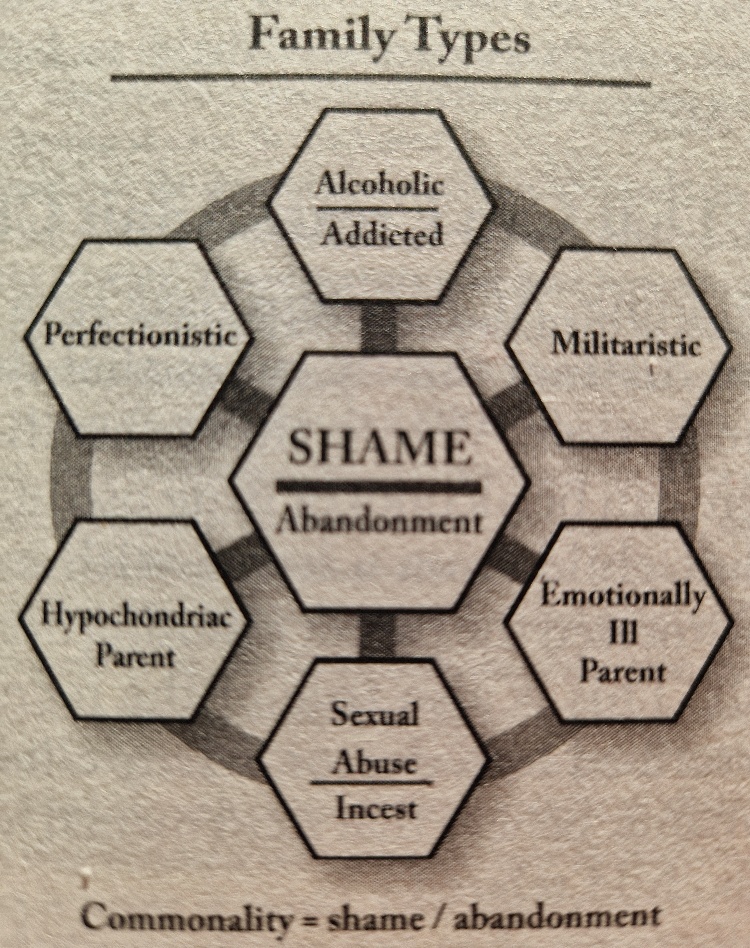
Role reversal (parentification), scapegoating, abuse — physical, emotional, spiritual, and sexual — or unresolved addiction and other mental health issues; these are some of the attributes of such families. The generational aspect is easily explained. If the parents of today’s family themselves grew up in such circumstances, they are highly unlikely to be able to teach their children — by example —the basic elements of healthy family living. They are incapable of serving as role models. We cannot pass on what we haven’t got. For the children of such dysfunctional families, our only chance is to learn these emotionally mature behaviors after we leave the nest, usually on the back of experiencing some form of existential crisis…

Read More »
Leadership

Healing

The most challenging years of life are, by definition, those early formative ones. Clinical research points to the fact that the fundamental wiring of our neural networks is almost completely laid down by our fourth birthday. These networks determine our temperament, our behavioral patterns, and belief systems well into adulthood. They will remain dominant until we consciously begin the practice of rewiring, of rewriting the script – if we are so lucky to realize the possibility of doing so…

Read More »

Buchen Sie jetzt Ihre kostenlose Sitzung!

Translate »